
Square Bar Manufacturers in India: Uses, Sizes & Specifications
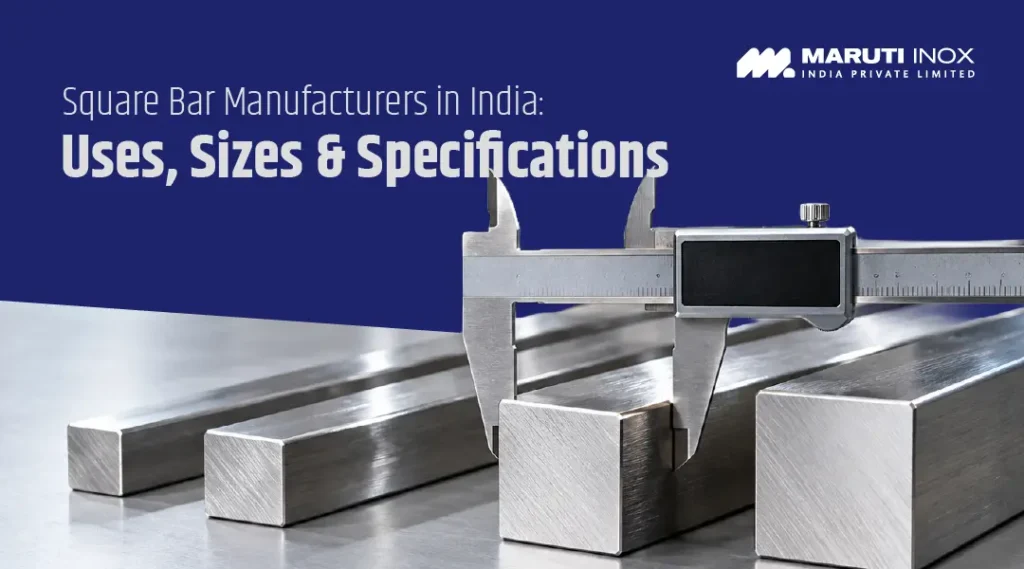
A square bar is a solid metal product with a square cross-section, widely utilized across industrial manufacturing, heavy engineering, precision machining, and structural fabrication applications. Sourcing the right square bar requires precise evaluation of material grades, dimensional tolerances, surface conditions, and manufacturing processes (such as hot-rolling or cold-drawing). Choosing a reliable square bar manufacturer in India is critical for engineering integrity. Procurement teams must verify production capacities, material test certificates (MTCs), size ranges, and compliance with international standards before placing bulk or custom orders. Maruti Inox India Pvt Ltd is a premier stainless steel long products manufacturer based in Mehsana, Gujarat, specializing in high-grade industrial square bars. Explore the comprehensive stainless steel product range and learn more about our state-of-the-art manufacturing facility. This authoritative guide breaks down square bar classifications, precise size specifications, industrial applications, and key criteria for evaluating stainless steel square bar manufacturers in India. What Is a Stainless Steel Square Bar? A stainless steel square bar is a solid metal bar featuring a uniform square cross-section, engineered to deliver high tensile strength, structural rigidity, and superior corrosion resistance. They are supplied in custom or standard lengths according to structural and machining requirements. Depending on production routes, square bars are categorized into hot-rolled and cold-drawn variants. Each variant caters to different industrial tolerances and surface finish demands. Key Procurement Checklist for Square Bars: Material Grade & Standard: Compliance with ASTM/DIN, AISI, EN, or JIS standards. Cross-Sectional Dimensions: Exact width across flats (e.g., 20mm x 20mm up to 53mm). Dimensional Tolerance: Precision classes like h11, h9, or custom tolerances. Straightness & Length: Standard lengths up to 6.5 metres with tight camber control. Surface Finish: As-rolled, pickled, polished, or cold-drawn bright finishes. Material Traceability: Mill Test Certificates (MTC) as per EN 10204 3.1. Types of Stainless Steel Square Bars 1. Hot-Rolled Square Bar Hot-rolled square bars are produced by passing heated billets through rolling mills to form the square profile. They are ideal for heavy-duty structural frames, supports, and general industrial fabrication where standard dimensional tolerances are acceptable. Size Range: Available from 16 mm to 53 mm. Standard Lengths: Up to 6.5 metres. 2. Cold-Drawn Square Bar Cold-drawn square bars are manufactured by drawing hot-rolled stock through a die at room temperature. This mechanical process enhances surface finish quality, improves tensile strength, and achieves tighter dimensional control (such as h11 tolerance). They are widely preferred for precision machining and automated component manufacturing. Explore our detailed range of cold-drawn square bars for precision engineering and machining applications. Size Range: Available from 16 mm to 50 mm. Standard Lengths: Up to 6.5 metres. Hot-Rolled vs. Cold-Rolled Square Bar Comparison Parameter Hot-Rolled Square Bar Cold-Drawn Square Bar Manufacturing Process Shaped at elevated rolling temperatures Drawn through dies at ambient temperature Surface Finish Scaled or matte finish; requires cleaning for fine use Uniform, smooth, and bright surface finish Dimensional Tolerance Standard industrial tolerances Tight precision tolerances (e.g., h11) Mechanical Strength Standard structural strength Enhanced tensile strength due to strain hardening Primary Application Heavy fabrication, structural supports, brackets Precision machining, shafts, fasteners, engineering parts Standard Sizes and Technical Specifications When issuing a Purchase Order (PO) to a square bar manufacturer, technical specifications must be explicitly detailed to avoid supply discrepancies: Dimensions: Specify exact width x width in millimetres (e.g., 25×25 mm, 40×40 mm). Stainless Steel Grade: Select based on operational environments (e.g., austenitic grades like 304/304L or 316/316L). Tolerance Class: Define if tight mechanical tolerances (like h11) are mandatory. Surface Condition: Indicate pickled, annealed, or cold-drawn bright finish requirements. Documentation: Demand complete Mill Test Certificates (MTC) verifying chemical composition and mechanical properties. Primary Applications of Stainless Steel Square Bars Industrial Fabrication: Structural frameworks, base plates, support columns, and architectural brackets. Precision Machining: Raw stock for CNC machining, manufacturing custom bolts, nuts, gears, and architectural fittings. Process Equipment Manufacturing: Components for chemical plants, food processing machinery, dairy equipment, and pharmaceutical skids. Automotive & Marine Engineering: Drive shafts, structural chassis components, and marine hardware exposed to corrosive elements. How to Choose the Right Stainless Steel Grade Selecting the proper grade ensures longevity and structural safety in corrosive or high-stress environments: Grade 304 / 304L: The most versatile austenitic grade; ideal for general industrial applications, architectural trim, and food-handling equipment. Grade 316 / 316L: Contains Molybdenum for enhanced resistance against chlorides, marine environments, and chemical processing. Grade 303: Free-machining austenitic grade with added sulfur; optimal for high-speed automated screw machining. Grade 321: Titanium-stabilized grade designed for high-temperature service and resistance to intergranular corrosion. 400-Series Grades: High hardness and wear-resistant martensitic grades used in specialized mechanical applications. How to Choose a Reliable Square Bar Manufacturer in India Evaluating industrial metal suppliers requires a structured checklist to ensure quality consistency and dependable supply chains: Verify Production Infrastructure: Ensure the manufacturer has in-house rolling, drawing, straightening, and cutting capabilities. (Learn more about Maruti Inox’s manufacturing capabilities). Request Material Test Certificates (MTC): Ensure full batch traceability and compliance with international material standards. Assess Customization Capabilities: Check if the supplier can cater to non-standard lengths, precise tolerances, and specialized surface finishes. Evaluate Supply Chain & Lead Times: Confirm production scheduling, safe packaging methods (such as bundled export-grade wooden packaging), and pan-India/global logistics capability. Enquire About Stainless Steel Square Bars Looking for premium-grade stainless steel square bars for your industrial or engineering project? Partner with Maruti Inox India Pvt Ltd. Share your required grade, precise dimensions, tolerance class, and quantity with our technical sales team to receive an optimized quote and verify stock availability. Frequently Asked Questions What is a square bar used for? Square bars are solid metal bars used in industrial fabrication, machining, equipment manufacturing, construction supports, and structural engineering due to their high strength and uniform cross-section. Who are the leading square bar manufacturers in India? Maruti Inox India Pvt Ltd (based in Mehsana, Gujarat) is a trusted manufacturer specializing in premium stainless steel long products, including hot-rolled and cold-drawn square bars for global industrial sectors. What is the difference between hot-rolled and cold-drawn square bars? Hot-rolled bars are shaped
Cold Drawn vs Peeled vs Ground Bright Bars: What Is the Difference?
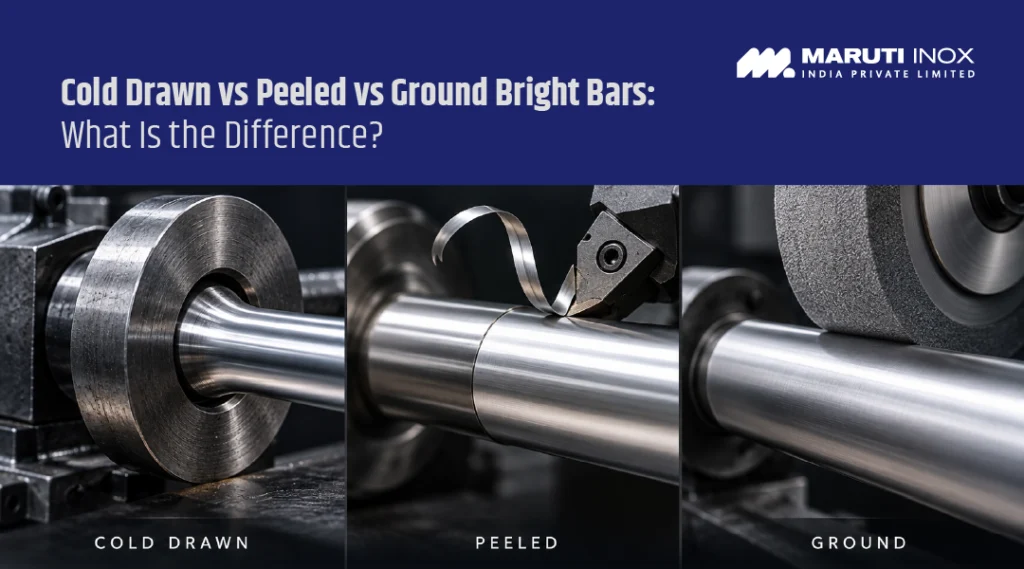
Cold drawing, peeling and grinding are different processing routes used to achieve specific dimensional and surface conditions in stainless steel bright bars. Understanding how these processes differ helps engineers and buyers specify material according to the next manufacturing operation rather than selecting a bright bar only by grade and diameter. Maruti Inox produces cold-drawn/ground bright bars and peeled/ground bright bars within its documented stainless steel long-product range. Its manufacturing route also incorporates drawing, turning and grinding according to product requirements. How Does Each Bright Bar Process Work? Although cold drawing, peeling and grinding can all be associated with bright-bar production, they do not affect the bar in the same way. Process What happens Main purpose Cold drawing The bar is drawn through a die, reducing and controlling the section Closer dimensional control and improved surface condition Peeling Material is machined from the outer surface of round stock Remove the outer surface layer and control the round section Grinding A controlled amount of surface material is removed Achieve the required surface condition and, where specified, closer dimensional control Cold Drawing Cold-drawn bright bars are produced by drawing material through a die. The process reduces and controls the section while improving dimensional consistency and surface characteristics. Maruti Inox manufactures cold-drawn round, square and hexagonal bright bars. Peeling Peeling uses a different approach. Instead of drawing the complete section through a die, material is removed from the outer surface of round bar stock. Peeled bars can subsequently undergo grinding and polishing when the required finished condition calls for further control of the outside surface. Grinding Grinding is a finishing operation in which controlled surface material is removed to achieve the required surface condition and, where specified, closer dimensional control. This is why cold drawing, peeling and grinding should not be treated as interchangeable processes. Drawing changes the section through deformation, while peeling and grinding remove material from the surface. Cold Drawn vs Peeled Bars: What Is the Practical Difference? The main difference between cold-drawn and peeled bars is how the required dimension and surface condition are achieved. Cold drawing shapes the section through plastic deformation as the bar passes through a die. Peeling machines away the outer layer of round stock, which can then be ground or polished when additional surface or dimensional control is required. For buyers, the important point is that the processing route should be selected according to the required final condition, rather than treating cold-drawn and peeled bars as interchangeable products. Maruti Inox’s manufactures cold-drawn range includes: Round sections: 5–19 mm Square sections: 16–50 mm Hexagonal sections: 16–50 mm Its documented cold-drawn tolerances include h9/h11 for rounds and h11 for square and hexagonal sections. Peeled and Ground Bright Bars for Larger Round Sections Maruti Inox manufactures peeled and ground bright bars specifically in round sections from 15–125 mm. Available tolerances include h9, h10, h11, K12, K13 and DIN 1013, with the supply condition stated as peeled/ground and polished. Length varies according to diameter. This creates an important specification distinction. The documented cold-drawn range covers round, square and hexagonal geometries, while the peeled/ground range is documented for round bars and extends to larger diameters. Therefore, buyers should consider geometry, diameter, tolerance and required surface condition together when selecting between the available bright-bar routes. Why Are Bright Bars Ground? Grinding is used when the required surface and dimensional condition cannot be achieved through the preceding manufacturing route alone. It removes a controlled amount of material from the surface to achieve the specified finish and, where required, closer dimensional control. For buyers asking which bright bar is suitable for precision machining, there is no universal answer based only on the process name. Bar geometry, starting dimension, tolerance, surface requirement and machining allowance should determine the appropriate selection. Maruti Inox specifically describes its peeled bars as having enhanced surface finish and dimensional accuracy for precision applications. How Do I Choose the Right Bright Bar? Start with the finished component and its machining requirements. Establish the material specification first, then select the processing route that can provide the required final condition. Before selecting a bright bar, define: Grade – Identify the stainless steel grade required for the application. Geometry – Determine whether the component requires round, square or hexagonal stock. Starting size – Define the required diameter or section size. Tolerance – Specify the dimensional tolerance required by the component or machining process. Surface condition – Establish the required surface finish or condition. Machining allowance – Consider how much material will be removed during subsequent processing. Length – Define the required bar length. The processing route should then be selected according to these requirements. Maruti Inox supports bright-bar processing with in-house testing capabilities, including surface-roughness testing alongside chemical, mechanical, corrosion and magnetism testing. For your bright-bar requirements, share your grade, section, size, tolerance and required supply condition with Maruti Inox. Contact our team to discuss the appropriate manufacturing route. Frequently Asked Questions What is the difference between cold-drawn, peeled and ground bright bars? Cold drawing controls the section through deformation, peeling removes the outer layer of round stock, and grinding removes a controlled amount of surface material as a finishing operation. Which is better for precision machining: cold drawn or peeled/ground bright bars? Neither process is automatically better. Selection should be based on the component geometry, starting dimension, required tolerance, surface condition and machining requirements. What are peeled and ground bright bars used for? Peeled and ground bright bars provide round starting stock where controlled dimensions and improved surface condition are required for subsequent precision processing. Which bright bar should I choose for precision machining? Start with the component drawing and define the required geometry, size, tolerance, surface condition and machining allowance. The appropriate processing route can then be selected based on these requirements. What tolerances are available for stainless steel bright bars? Maruti Inox documents h9/h11 for cold-drawn rounds, h11 for cold-drawn square and hexagonal bars, and h9, h10, h11, K12, K13 and DIN 1013 for peeled/ground rounds. How do I choose
Hex Bar Manufacturers in India: Uses, Sizes & Specifications
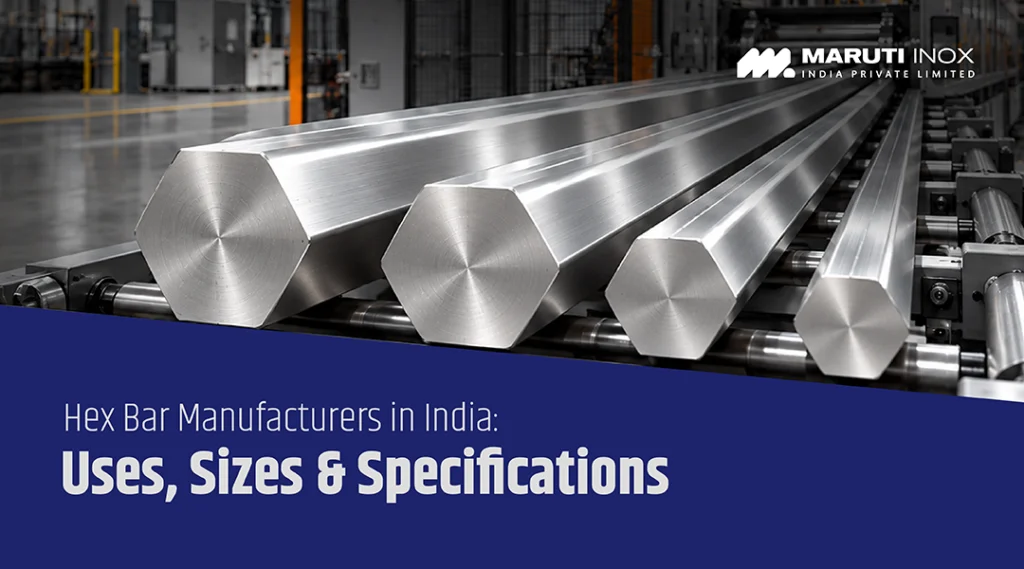
Choosing a stainless steel hex bar involves more than selecting a grade and dimension. The hexagonal profile, manufacturing condition, dimensional tolerance and surface requirements can all affect how the material is used in machining and component production. For buyers evaluating hex bar manufacturers in India, these factors should be considered together. Maruti Inox produces stainless steel hexagonal products through hot-rolled and cold-drawn routes, allowing buyers to select a supply condition based on their downstream requirements. What Is a Stainless Steel Hex Bar? A stainless steel hex bar is solid stainless steel stock with six flat faces running along its length. Unlike a round bar with a circular cross-section, a hexagonal bar provides a defined six-sided geometry that can be useful when flats are required in the finished component or during subsequent machining. The appropriate starting profile can help manufacturers plan the machining process around the required component geometry. However, specifying a hex bar requires more than stating its nominal size. For procurement, the specification should also define the stainless steel grade, hexagonal size, dimensional tolerance, supply condition, length and applicable standard or drawing. Hot-Rolled vs Cold-Drawn Hex Bars The required supply condition should be considered in relation to how the bar will be processed after purchase. Hot-Rolled Hex Bars Maruti Inox specifies hot-rolled stainless steel hexagonal bars in sizes from 16 to 53 mm, supplied in rolled and straightened condition, with dimensional requirements referenced to ASTM/DIN. Lengths are available up to 6 metres. Hot-rolled hex bars can be considered where the subsequent manufacturing process does not require the tighter dimensional control or surface characteristics associated with cold-drawn material. Cold-Drawn Hex Bars For applications requiring closer dimensional control and an improved surface, Maruti Inox’s cold-drawn bright-bar range includes hexagonal sections from 16 to 50 mm, with h11 tolerance and lengths up to 6.5 metres. Cold drawing changes the dimensional and surface characteristics of the bar and can provide a more controlled starting form for downstream machining. Therefore, comparing hex bar sizes without considering the supply condition can result in an incomplete technical comparison. Stainless Steel Hex Bar Sizes and Specifications The required specification should give the production and inspection teams enough information to identify the material correctly. Specification What to define Stainless steel grade Required grade based on application and service conditions Hexagonal size Required nominal dimension Tolerance Required dimensional tolerance Supply condition Hot rolled or cold drawn Length Required standard or cut length Applicable standard Relevant ASTM/DIN specification or customer drawing Surface requirements Required surface condition or finish Inspection requirements Testing and documentation requirements For example, Maruti Inox specifies 16–53 mm hexagonal sizes for its hot-rolled range and 16–50 mm for its cold-drawn hexagonal bright-bar range. The applicable tolerance and supply condition should therefore be confirmed along with the nominal size. Uses of Stainless Steel Hex Bars The main practical advantage of a hex bar is its six-flat geometry. This makes hexagonal stock suitable for components where the flats form part of the finished design or provide a useful starting geometry for machining. Common applications can include: Machined engineering components Fastener-related components Fittings Valves and other industrial components Components requiring a defined six-sided profile The profile alone should not determine the material selection. Grade, corrosion exposure, mechanical requirements, machining operations and component design should also be considered before selecting the material. Stainless Steel Grades for Hex Bars Grade selection should be based on the operating environment and the requirements of the finished component. Maruti Inox supplies stainless steel in grades including 303, 304/304L, 310, 316/316L and selected 400-series grades, with additional grades available for specific requirements. The appropriate grade can depend on factors such as corrosion resistance, mechanical properties, machining requirements, temperature conditions and the intended application. Buyers should therefore confirm the required grade and product form before placing an order. How to Choose the Right Stainless Steel Hex Bar Start with the component drawing or manufacturing requirement and work backwards to the raw-material specification. Before selecting a stainless steel hex bar, check: Grade – Does the material meet the required chemical and performance requirements? Size – Is the nominal hexagonal dimension appropriate for the finished component? Tolerance – Does the supplied dimensional tolerance meet the machining requirement? Supply condition – Is hot-rolled or cold-drawn material more appropriate for the next manufacturing stage? Length – Does the available length suit the production process? Surface requirements – Is the supplied surface condition suitable for the intended application? Inspection and documentation – Are the required tests, inspection records and material documentation available? When evaluating a stainless steel hex bar manufacturer or supplier in India, it is also important to check whether the manufacturer can consistently produce the required grade, geometry, tolerance and supply condition. Maruti Inox integrates melting, rolling and finishing operations and produces stainless steel long products for different downstream applications. Its documented inspection capabilities include chemical, mechanical, corrosion, surface-roughness and other testing requirements. The company’s ISO 9001:2015 certification scope also includes the manufacture and supply of stainless steel hex bars. For hex bar specifications, size availability or supply enquiries, contact our team. Frequently Asked Questions What is a stainless steel hex bar? A stainless steel hex bar is solid stainless steel stock with six flat faces along its length. It is supplied in different grades, sizes, tolerances and manufacturing conditions for engineering and component-production applications. What are stainless steel hex bars used for? Hex bars are commonly used for machined components, fittings, fastener-related parts and other engineering applications where six-sided geometry is useful in the finished component or subsequent machining. What sizes are available in stainless steel hex bars? Maruti Inox specifies 16–53 mm for hot-rolled hexagonal bars and 16–50 mm for cold-drawn hexagonal bright bars. The applicable tolerance and supply condition should be confirmed for the required size. What is the difference between a hex bar and a round bar? The main difference is cross-sectional geometry. A hex bar has six flat faces, while a round bar has a circular cross-section. The required component geometry and downstream machining
How to Choose a Reliable Stainless Steel Manufacturer in India
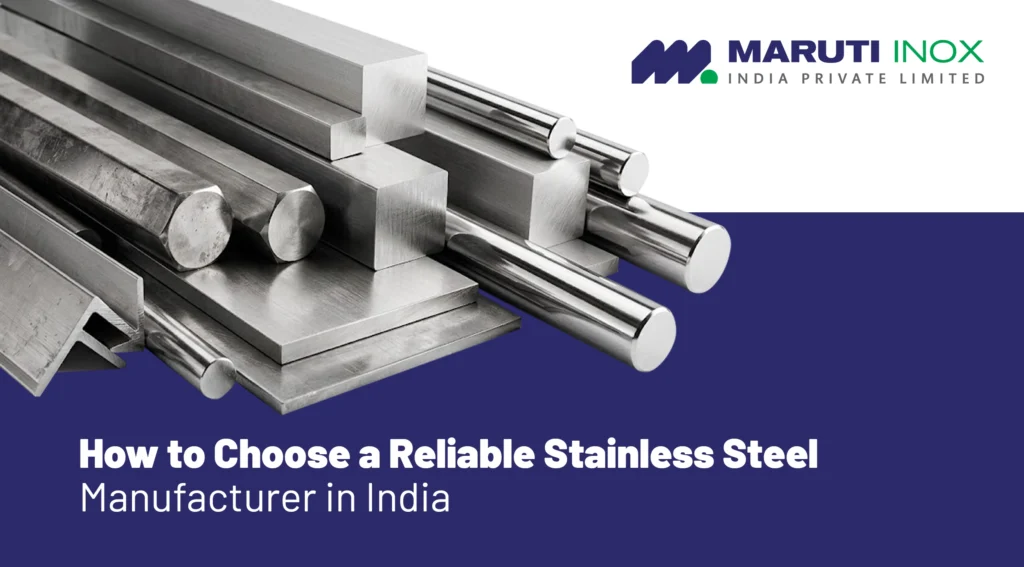
Choosing a reliable stainless steel manufacturer in India involves more than comparing prices or confirming the grade listed on a quotation. Buyers should evaluate manufacturing capability, product specifications, quality controls, testing facilities, material traceability, documentation, production capacity and delivery requirements before placing an order. A stainless steel product may meet the specified grade yet create problems during machining, fabrication or inspection if its dimensions, tolerances, surface condition, mechanical properties or documentation do not match the purchase requirements. For this reason, supplier evaluation should be treated as a technical qualification process rather than a simple price comparison. This guide explains the key factors buyers should verify when evaluating a stainless steel manufacturer in India, including manufacturing control, product capability, quality certification, testing, documentation, packaging and supply capability. 1. Verify Whether the Company Is Actually a Manufacturer A useful first question when choosing a stainless steel manufacturer in India is whether the company manufactures the steel or primarily processes or supplies material sourced from another producer. This distinction can affect production control, traceability, testing and responsibility for the final product. Buyers should check which stages of production are controlled by the manufacturer, such as melting and refining, casting, rolling, heat treatment and downstream finishing. The extent of in-house manufacturing may vary between companies, so buyers should confirm the specific processes relevant to their product requirements. Maruti Inox’s documented production route starts with furnace melting and refining, followed by billet and ingot casting and rolling. Depending on the product, downstream operations include heat treatment, straightening, cold drawing, pickling and cleaning, peeling and grinding. Inspection, packaging and dispatch complete the supply process. Understanding where manufacturing control begins and which production stages are handled by the manufacturer helps buyers evaluate responsibility, traceability and product consistency before placing an order. 2. Match Product Capability with Your Purchase Specification Do not qualify a manufacturer merely because it offers “stainless steel bars.” Establish exactly what forms and processing conditions it can manufacture. As a stainless steel long products manufacturer, Maruti Inox manufactures Stainless Steel ingots, CC billets, RCS Bars, hot rolled bars, cold drawn/ground bright bars, peeled/ground bright bars, forged round bars, angles and flats. For a buyer evaluating a stainless steel bar manufacturer, the next step is to match grade, geometry, dimensions, tolerance, length and supply condition with the component or downstream process. 3. Check Quality Standards and Certification Scope A stainless steel manufacturer’s certification should be evaluated based on its applicable scope rather than treated simply as a quality badge. Buyers should check whether the certification, standard and documented quality system are relevant to the products and requirements being purchased. When reviewing a stainless steel manufacturer’s certifications, verify: Certification standard: Identify the applicable quality-management or product-related standard. Certification body: Check which independent organisation issued the certificate. Scope: Confirm which products, processes or manufacturing activities are covered. Validity: Check that the certification is current at the time of supplier evaluation. Product requirements: Confirm that the manufacturer’s documented standards align with the applicable product specification and customer requirements. Maruti Inox is TÜV SÜD ISO 9001:2015 certified for the manufacture and supply of stainless steel hot rolled bars, bright bars, hex bars, square bars, angles and flats. The company also states compliance with American Standard (ASTM), DIN EN standard (European/German), ISO tolerance standard and customer specific requirements. When reviewing stainless steel manufacturer certifications, buyers should check the issuing body, applicable standard, certification scope and current validity. 4. Evaluate Testing and Inspection Capabilities Material quality should not be judged by surface appearance alone. Depending on the product specification and application, buyers may need to verify chemical composition, mechanical properties, dimensions and surface condition. When evaluating a stainless steel manufacturer, check whether the required testing and inspection capabilities are available. These may include: Chemical testing to verify the specified grade composition. Mechanical testing to evaluate required mechanical properties. Corrosion testing where corrosion performance is specified. Surface roughness testing for products with defined surface requirements. Dimensional and surface inspection to verify size, tolerances and supply condition. Maruti Inox documents chemical, mechanical, corrosion, surface roughness and magnetism testing as part of its quality and inspection capabilities. Buyers should define the required tests, applicable standards and acceptance criteria at the enquiry or purchase-order stage so that the manufacturer can supply material against clearly established requirements. 5. Review Documentation Before Placing the Order A technically complete enquiry should identify grade, dimensions, tolerances, quantity, supply condition, testing requirements and required documentation. An MTC, or Material Test Certificate, typically records material-specific test information against the supplied product. Buyers should specify the required certificate type and documentation requirements in the purchase order rather than assuming what will accompany the material. 6. Check Production Capacity and Delivery Capability A manufacturer should be evaluated not only on whether it can produce the required specification, but also on whether it can supply the required quantity within the expected delivery schedule. Before placing an order, buyers should confirm production capacity, available sizes and grades, typical lead times, recurring-order capability, packaging requirements and delivery arrangements. For domestic or export supply, packaging and protection during transit should also be considered. Maruti Inox documents HDPE-wrapped bundles, ISPM-15 compliant wooden boxes, protective collars and rust-preventive wrapping, with packaging configurations based on application and destination requirements. Clear communication of grade, size, tolerance, quantity, supply condition, testing and delivery requirements helps the manufacturer plan production and dispatch according to the purchase specification. Evaluating Maruti Inox for Stainless Steel Long Products Maruti Inox manufactures stainless steel long products in Mehsana, Gujarat, including continuous cast billets, forging quality ingots, hot rolled bars, bright bars, forged round bars, RCS bars, angles and flats. Its manufacturing and quality processes support product specifications, testing and documentation requirements. For product availability, specifications or customised requirements, contact Maruti Inox with your required grade, product form, dimensions, quantity and testing requirements. Frequently Asked Questions What should I check when choosing a stainless steel manufacturer in India? Check manufacturing capability, product range, quality standards, testing, documentation, traceability, capacity and delivery capability. What certifications should I check
Stainless Steel Grades Explained: Types, Properties, Uses & How to Choose
A stainless steel grade is more than a number on a purchase specification. It identifies a specific chemical composition that determines how the material performs in terms of corrosion resistance, heat resistance, machinability, formability and mechanical properties. This is why two stainless steel bars with identical dimensions can behave differently during manufacturing or in service. At Maruti Inox, understanding stainless steel grades is an important part of specifying the right material for different industrial applications. The suitable grade depends on the required properties, operating environment, manufacturing process and intended application. So, which stainless steel grade should I choose? Start with what the finished component must do. The grade should be selected based on the operating conditions and manufacturing requirements, rather than simply the grade number. What Are Stainless Steel Grades and How Are They Classified? Stainless steel grades are material designations used to identify different stainless steels based on their chemical composition and resulting properties. These grades help specify characteristics such as corrosion resistance, strength, hardness and machinability. Stainless steel is commonly classified by metallurgical structure into austenitic, ferritic, martensitic, duplex and precipitation-hardening families. It is also identified through numerical series such as 200, 300 and 400. The 200 and 300 series mainly include austenitic grades, while the 400 series includes both ferritic and martensitic grades. What Changes from One Grade Family to Another? The practical difference becomes clearer when material requirements are considered. 200-series austenitic steels use manganese and nitrogen as part of their alloy design and generally contain less nickel than conventional 300-series austenitic grades. The 300 series includes familiar engineering grades such as 304 and 316. These are chromium-nickel austenitic stainless steels. Grade 316 also contains molybdenum, an important compositional difference when greater resistance to localised corrosion is required in suitable service environments. The 400 series requires more careful specification. Ferritic grades and hardenable martensitic grades both appear within this series, meaning their mechanical behaviour, corrosion performance and processing characteristics can differ considerably. This is why types of stainless steel grades should be compared by chemistry and expected performance rather than series number alone. How Do I Choose the Right Stainless Steel Grade? Instead of asking for the “strongest” or “best” stainless steel, define the component’s working conditions first. How do I choose the right stainless steel grade? Build the specification around four questions: What will contact the component? Water, chemicals, chlorides and other process media can change the corrosion-resistance requirement. How hot will it operate? A component exposed to elevated temperatures needs a grade selected for that temperature range rather than one chosen only for room-temperature properties. How will it be manufactured? Turning, drilling, welding, forming and heat treatment place different demands on the material. What must the finished component achieve? Required hardness, mechanical performance, dimensional precision and service life should influence the final decision. Therefore, the best stainless steel grade for different applications is determined by the complete service and manufacturing specification, not by popularity of a particular grade. Connecting Grade Selection with Stainless Steel Product Forms Selecting the right stainless steel grade involves more than choosing an alloy designation. The required product form, dimensions, tolerances and supply condition must also match the component’s manufacturing process and service requirements. Maruti Inox manufactures stainless steel long products in grades including 303, 304/304L, 310, 316/316L, 316Ti, 321, 410, 416, 420, 430F and 431, subject to product and specification availability. The manufacturing route includes melting, refining, casting and rolling, followed by applicable finishing and processing operations such as heat treatment, cold drawing, peeling and grinding. When specifying stainless steel bars or other long products, consider the grade, required dimensions, material standard, mechanical requirements and intended processing route together. Explore Maruti Inox’s stainless steel product range to learn more about available product forms and manufacturing capabilities, and contact the company to discuss your application-specific requirements. Frequently Asked Questions What are stainless steel grades? Stainless steel grades are alloy designations that identify stainless steels with specific chemical compositions and material properties. What are the main types of stainless steel? The main types are austenitic, ferritic, martensitic, duplex and precipitation-hardening stainless steels What is the difference between 200, 300 and 400 series stainless steel? The 200 and 300 series mainly include austenitic grades, while the 400 series includes ferritic and martensitic grades with different properties. Which stainless steel grade is best for corrosion resistance? There is no single best grade for every environment. Grade selection depends on factors such as the corrosive medium, chloride exposure and operating temperature. What is the difference between SS 304 and SS 316? Both are austenitic stainless steels, but SS 316 contains molybdenum, which can provide better resistance to localized corrosion than SS 304 in certain environments. Which stainless steel grade is suitable for machining? Grades such as 303 and 416 are commonly selected for improved machinability, although the final choice also depends on corrosion and mechanical requirements.
How to Choose the Right Stainless Steel Round Bar Manufacturer in India
Choosing a Stainless Steel Round Bar Manufacturer in India requires more than comparing diameter and price. The correct round bar must match the component’s grade, dimensional tolerance, surface condition, processing route and inspection requirements. A capable manufacturer should be able to translate these requirements into a clearly defined supply specification. For buyers developing a stainless steel round bar buying guide, the following checkpoints help separate basic product availability from manufacturing capability. 1. Start with the Required Round Bar Type For buyers asking what a stainless steel round bar, it is a solid cylindrical stainless steel product supplied in different processed conditions for subsequent machining, fabrication or component manufacturing. The main stainless steel round bar types relevant to Maruti Inox’s documented portfolio include hot rolled round bars, cold drawn/ground bright round bars, peeled/ground bright round bars and forged round bars. Each follows a different processing route and therefore should not be specified interchangeably. 2. Verify Sizes, Dimensions and Tolerances A reliable manufacturer must provide transparent data regarding achievable size ranges and dimensional tolerances. Maruti Inox documents the following capabilities: Hot Rolled Round Bars: 16 mm – 180 mm (ASTM A484 tolerance) Cold Drawn Bright Rounds: 5 mm – 19 mm (h9/h11 tolerances) Peeled/Ground Bright Rounds: 15 mm – 125 mm (h9, h10, h11, K12, K13, and DIN 1013 options) Forged Rounds: 130 mm – 400 mm These dimensions should be matched directly against your component’s engineering drawing rather than selected independently. 3. Select the Grade for the Application The required stainless steel round bar grades depend on service conditions and subsequent processing. Corrosion exposure, temperature, mechanical requirements and machinability should therefore be established before ordering. Maruti Inox’s documented manufactured grades include 303, 304/304L, 310, 316/316L, 316Ti, 321, 410, 416, 420, 430F and 431. Additional grades are available based on application requirements. A Stainless Steel Round Bar Manufacturer should consequently be evaluated on the complete grade-size-condition combination required, not grade availability alone. 4. Define the Application Before the Specification What Are the Uses of Stainless Steel Round Bars? Typical engineering uses can include machined shafts, pins, fasteners, fittings, valve components and other turned parts, subject to the selected grade and mechanical requirements. Because stainless steel round bar applications vary considerably, procurement teams should provide the manufacturer with the intended processing and critical dimensional requirements. This helps determine whether hot rolled, cold drawn, peeled/ground or forged material is appropriate. 5. Check Manufacturing and Quality Controls A meaningful stainless steel round bar quality check should consider more than surface appearance. Buyers should evaluate chemical composition, mechanical properties, dimensions and any application-specific inspection requirements. Maruti Inox documents chemical, mechanical, corrosion, surface roughness and magnetism testing. Its integrated manufacturing sequence at its facility in Mehsana, Gujarat, covers melting, refining, casting, rolling, heat treatment and relevant finishing operations before inspection and dispatch The company is also TÜV SÜD ISO 9001:2015 certified for the manufacture and supply of specified stainless steel long products, including hot rolled and bright bars. 6. Issue a Complete Purchase Specification Before requesting a quotation, define the stainless steel round bar specifications clearly: grade, diameter, tolerance, length, supply condition, surface requirement, quantity, testing and required documentation. This reduces technical ambiguity between enquiry and production. Discuss your required round bar grade, diameter, tolerance and supply condition with Maruti Inox to identify the appropriate manufacturing route for your application. Frequently Asked Questions What is a Stainless Steel Round Bar? It is a solid cylindrical stainless steel long product supplied in conditions such as hot rolled, cold drawn, peeled/ground or forged. How do I choose the right stainless steel round bar manufacturer in India? Compare grade-size capability, manufacturing route, tolerances, testing, quality certification and ability to meet your purchase specification. Which stainless steel grade should I choose for a round bar? Select the grade according to corrosion exposure, operating temperature, mechanical requirements, machinability and component design. What sizes and profiles should I specify when ordering stainless steel round bars? Specify grade, round diameter, tolerance, length and required supply/surface condition. What documents should I ask for when buying stainless steel round bars? Documentation depends on the purchase specification. Buyers should define required material, inspection and quality documents during enquiry rather than after production. What is the difference between hot rolled and bright stainless steel round bars? Hot rolled bars are supplied after rolling and straightening, while bright bars receive additional processing such as cold drawing, peeling, grinding or polishing for closer dimensional and surface requirements.
How to Choose a Bright Bar Manufacturer in India: Complete Buyer’s Checklist
Choosing a bright bar manufacturer in India should begin with the component requirement, not simply the supplier’s product list. Bar geometry, dimensional tolerance, surface condition, grade, processing route and inspection requirements can determine how efficiently the material performs in subsequent machining or component production. For procurement and engineering teams asking how to choose steel manufacturer capabilities for precision bar requirements, the following bright bar checklist provides a practical starting point. 1. Check the Actual Bright Bar Manufacturing Route The term Bright Bar covers material produced through different finishing routes. Ask the manufacturer how the required bar is processed and whether that route matches your application. Maruti Inox documents cold drawing, peeling, grinding and polishing within its bright bar processing capabilities. Its production sequence also connects these downstream operations with melting, refining, casting, rolling, heat treatment, straightening and inspection. For buyers evaluating a cold drawn bar manufacturer, understanding this process chain provides more technical information than evaluating finished-bar availability alone. 2. Match Geometry, Size and Tolerance Never specify an SS Bright Bar by diameter or section size alone. Tolerance and geometry should be confirmed against the drawing, machining allowance and final component requirement. Maruti Inox produces cold drawn/ground bright bars in round, square and hexagonal sections. Documented round sizes are 5 – 19 mm with H9/H11 tolerances, while square and hexagonal sizes are 16 – 50 mm with H11 tolerance. Its peeled/ground round bright bars cover 15–125 mm, with H9, H10, H11, K12, K13 and DIN 1013 tolerance options documented in the brochure. 3. Verify Grade Availability Against the Application Grade selection should precede purchase confirmation. Corrosion environment, mechanical requirements, machinability and subsequent processing can all affect material selection. The current Maruti Inox portfolio documents grades including 303, 304/304L, 310, 316/316L, 316Ti, 321, 410, 416, 420, 430F and 431. Additional grades are stated as available based on application requirements. A stainless-steel bright bar supplier should therefore be evaluated on whether the required combination of grade, size, geometry, tolerance and supply condition can actually be produced. 4. Examine Testing and Quality Controls A dimensional check alone does not establish whether supplied material meets all relevant requirements. The brochure documents chemical, mechanical and corrosion testing along with surface roughness and magnetism testing. Buyers should define which inspection parameters and documentation are required for their purchase specification before placing the order. Certification should also be verified from current approved documentation rather than assumed from marketing terminology. 5. Evaluate Manufacturing Integration When comparing a bright bar manufacturer and supplier, establish which production stages are performed within the manufacturer’s own system. Maruti Inox integrates melting, rolling and finishing operations at one facility. Its brochure specifies 36,000 MTPA melting capacity, 60,000 MTPA rolling capacity and 30,000 MTPA bright bar processing capacity. Vertical integration does not automatically make one supplier suitable for every order. However, it gives buyers another factor to assess when examining process control, production traceability and coordination between upstream material production and downstream finishing. 6. Review Packaging and Dispatch Requirements Bright-bar procurement does not end at final inspection. Surface condition must also be considered during storage and transportation. For domestic and international movement, Maruti Inox documents HDPE-wrapped bundles, ISPM-15 compliant wooden boxes, protective collars and rust-preventive wrapping, with custom packaging configurations based on application and destination requirements. Discuss your bright bar grade, geometry, dimensional tolerance and supply-condition requirements with Maruti Inox before finalising your procurement specification. Frequently Asked Questions What should I check before choosing a bright bar manufacturer ? Check grade availability, manufacturing route, size range, geometry, dimensional tolerance, supply condition, testing capability, documentation and packaging against your purchase specification. What certifications should a bright bar supplier have ? Certification requirements depend on the buyer, market and application. Request current copies of applicable quality-system and product-related certifications rather than relying solely on website claims. What is the difference between cold drawn and ground bright bars ? Cold drawing changes bar dimensions by drawing material through a die. Grinding removes material from the surface to achieve the required dimensional or surface characteristics. The processes may also be combined within a specified finishing route. What tolerance standards apply to bright bars in India ? There is no single tolerance that applies to every bright bar requirement. The applicable tolerance should be specified according to product form and purchase requirement. Maruti Inox documents H9/H11 and H11 for specified cold-drawn forms and H9, H10, H11, K12, K13 and DIN 1013 for peeled/ground round bars. Why does manufacturing experience matter when choosing a supplier ? Experience becomes relevant when it is reflected in process knowledge, dimensional control, testing and the ability to understand application-specific requirements. Is a vertically integrated manufacturer more reliable ? Not automatically. Integration can provide greater coordination across production stages, but buyers should still evaluate actual specifications, process controls, testing and supply capability.
Stainless Steel Long Products Manufacturers in India: A Complete Guide by Maruti Inox
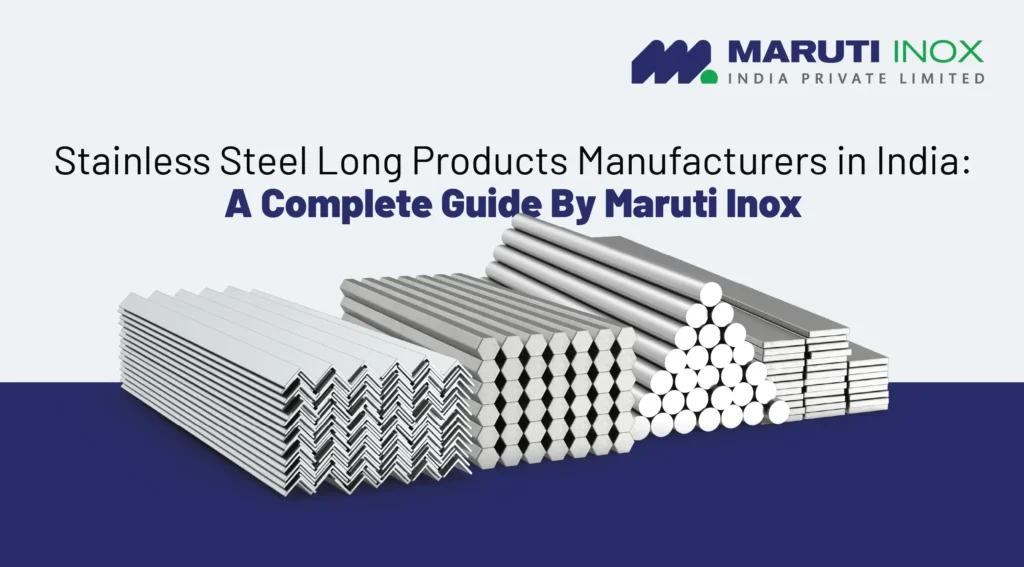
Stainless steel long products are semi-finished and finished metal forms used in machining, forging, fabrication, structural applications and industrial component manufacturing. They include continuous cast billets, forging quality ingots, hot rolled bars, bright bars, Round Corner Square (RCS) bars, forged round bars, stainless steel angles and flat bars. When comparing stainless steel long products manufacturers in India, industrial buyers need to evaluate more than product availability. Manufacturing capabilities, grade consistency, dimensional tolerances, surface condition, inspection practices and material documentation all influence whether a product is suitable for its intended application. Maruti Inox India Pvt Ltd is a stainless steel long products manufacturer based in Mehsana, Gujarat. Its integrated manufacturing operations connect melting and refining with casting, rolling and downstream finishing, enabling the production of different stainless steel long-product forms for industrial requirements. What Are Stainless Steel Long Products? Stainless steel long products are metal products manufactured in elongated or defined cross-sectional forms. Depending on their stage in the production process, they may be supplied as semi-finished material for further conversion or as finished bars and sections for machining, fabrication and engineering applications. Unlike flat products such as sheets and plates, long products are commonly supplied in round, square, hexagonal, rectangular or other defined cross-sectional geometries. Common examples include: Continuous cast billets: Semi-finished material used for further rolling and conversion. Forging quality ingots: Cast forms intended for downstream forging and hot-working operations. Hot rolled bars: Round, square and hexagonal bars produced through hot rolling. Bright bars: Precision-finished bars processed through methods such as cold drawing, peeling or grinding. RCS bars: Round Corner Square bars used as an intermediate product for further processing. Forged round bars: Bars produced through forging for applications requiring a suitable forged material form. Stainless steel angles and flat bars: Sections used in fabrication, structural assemblies and industrial applications. The appropriate product depends on the component design, required dimensions, material grade, finishing requirements and subsequent manufacturing process. How Are Stainless Steel Long Products Manufactured? Manufacturing route and process control are important considerations when evaluating stainless steel long products manufacturers. Each production stage influences the characteristics of the material supplied to the next stage. 1. Melting and refining Stainless steel raw materials are melted and refined to achieve the required chemical composition. Grade requirements determine the alloying elements needed in the finished steel. 2. Casting into billets or ingots The molten steel is cast into suitable forms for subsequent processing. Continuous cast billets and forging quality ingots serve different downstream manufacturing requirements and should be selected accordingly. 3. Hot rolling and forming Billets or other suitable feedstock are processed through rolling to produce defined cross-sectional forms. The rolling route, dimensions and supply condition depend on the intended product. 4. Heat treatment and straightening Where required by the product specification, heat treatment is used to achieve the specified material condition. Straightening helps bring the product within the applicable straightness requirements. 5. Downstream finishing Additional processing may include cold drawing, peeling, grinding, pickling or other specified surface treatments. These operations are not interchangeable: each serves particular dimensional, surface or processing requirements. 6. Inspection and dispatch The finished material is checked against the applicable requirements before packaging and dispatch. Inspection may cover chemical composition, mechanical properties, dimensions, surface condition and other specified characteristics. At Maruti Inox, these operations form part of an integrated manufacturing route, with subsequent processes selected according to the product and its requirements. Major Types of Stainless Steel Long Products Manufactured by Maruti Inox 1. Continuous Cast Billets Continuous cast billets are semi-finished stainless steel products supplied to rolling mills and other downstream processors for further conversion. Maruti Inox supplies continuous cast billets in square sections from 100 × 100 mm to 200 × 200 mm, with lengths up to 8 metres. Available supply conditions include as-cast and spot-ground. Buyers should confirm the required grade, cross-section, length, surface condition and material documentation before placing an order. Explore the available specifications of Continuous Cast Billets 2. Forging Quality Ingots Forging quality ingots are cast steel forms intended for downstream forging and hot-working operations. Their suitability depends on the required grade, ingot dimensions, forging process and finished component requirements. Maruti Inox supplies forging quality ingots in as-cast or spot-ground condition. The required material specification should be established according to the intended forging application. Learn more about Forging Quality Ingots 3. Hot Rolled Stainless Steel Bars Hot rolled bars are produced by rolling suitable steel feedstock into defined cross-sectional shapes. They may be used for further machining, forging, fabrication or other industrial processing. Maruti Inox’s documented product ranges include: Round bars: 16–180 mm Square bars: 16–53 mm Hexagonal bars: 16–53 mm Products are available in specified supply conditions, including as-rolled and straightened. Applicable dimensional requirements should be confirmed against the product specification and purchase order. View the product details for Hot Rolled Round Bars 4. Stainless Steel Bright Bars Bright bars undergo additional finishing to improve dimensional control and surface characteristics compared with the corresponding as-rolled condition. Depending on the product, finishing may involve cold drawing, peeling or grinding. Maruti Inox manufactures bright bars in different shapes and size ranges: Cold drawn or ground round bars: 5–19 mm, with documented h9/h11 tolerances. Cold drawn or ground square and hexagonal bars: 16–50 mm, with documented h11 tolerance. Peeled or ground round bright bars: 15–125 mm, with specified tolerances including h9, h10, h11, K12, K13 and DIN 1013 requirements. The applicable tolerance depends on the product, process and specification. Buyers should confirm the required dimensions, tolerance class and surface finish rather than assuming every bright bar has the same characteristics. Explore: Cold Drawn / Ground Bright Bars 5. Round Corner Square (RCS) Bars Round Corner Square bars combine a square cross-section with rounded corners. They can serve as intermediate material for subsequent manufacturing operations, depending on the required component and process. Maruti Inox documents RCS bars in sizes from 40–100 mm, in as-rolled, spot-ground and straightened conditions. Discover the specifications of RCS Bars 6. Forged Round Bars Forged round bars are produced through
Maruti Inox: India’s Vertically Integrated Stainless Steel Manufacturer
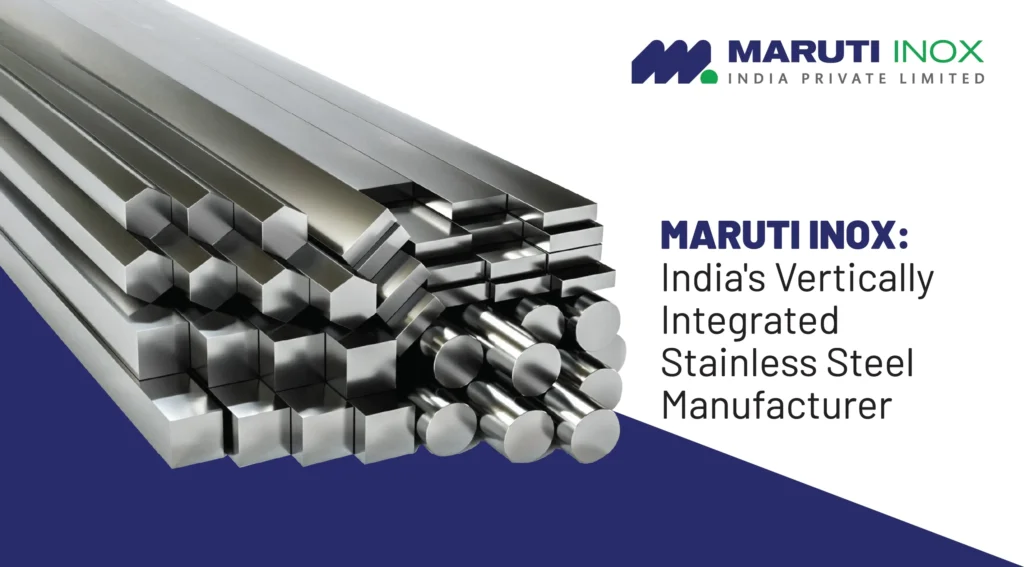
A vertically integrated stainless-steel manufacturer controls multiple production stages within one manufacturing system rather than depending entirely on separate processors for melting, rolling, finishing and inspection. Maruti Inox follows this integrated approach at its manufacturing facility in Mehsana, Gujarat, connecting primary steelmaking with downstream stainless-steel processing. For industrial buyers, this structure matters because sourcing stainless steel is not simply a question of selecting a grade. Chemical composition, heat treatment, dimensional control, surface condition and inspection all influence whether the supplied material is suitable for subsequent machining, fabrication or component production. What Vertical Integration Means in Stainless Steel Manufacturing In practical manufacturing terms, vertical integration creates continuity between upstream steel production and downstream finishing. At Maruti Inox, the documented production path progresses through melting, refining and billet or ingot casting before rolling and subsequent operations such as heat treatment, pickling or cleaning, cold drawing, peeling and grinding. Straightening and inspection are completed before material moves to packaging and dispatch. This makes the company a vertically integrated steel manufacturer rather than solely a processor of externally produced stainless-steel bars. Its manufacturing infrastructure integrates melting, rolling and finishing operations. The current brochure specifies 36,000 MTPA melting capacity, 60,000 MTPA rolling capacity and 30,000 MTPA bright bar processing capacity. Stainless Steel Products Manufactured by Maruti Inox The product portfolio covers material at different stages of the stainless-steel value chain. It includes CC billets and ingots for downstream processing, RCS Bars, hot-rolled round bars, square and hexagonal bars, cold drawn/ground bright bars, peeled/ground bright bars, forged round bars, angles and flat bars. The distinction between these forms is technically important. A buyer requiring material for further conversion may have different dimensional and surface requirements from an OEM purchasing precision-finished bright bars. For example, cold drawn/ground bright bars are produced in round, square and hexagonal geometries, with documented H9/H11 tolerance for specified round sizes and H11 for square and hexagonal forms. Peeled/ground round bright bars are available with specified tolerance options including H9, H10, H11, K12, K13 and DIN 1013. Quality Control Within the Manufacturing Route For a trusted stainless-steel manufacturer, quality control needs to extend beyond final dimensional inspection. Maruti Inox documents testing for chemical composition, mechanical properties and corrosion, along with surface roughness and magnetism testing. This allows relevant material characteristics to be evaluated before dispatch. Maruti Inox’s quality management system is TÜV SÜD ISO 9001:2015 certified. For procurement teams evaluating suppliers, this certification provides documented assurance of consistent manufacturing controls across the production process. Manufacturing from Gujarat for Domestic and Export Requirements The manufacturing facility is located at Indrad in Mehsana district, Gujarat. From this location, the stainless-steel manufacturer Gujarat India supplies material within India as well as international markets. The current company brochure states that its stainless-steel products are supplied across India and to more than 60 countries. Export preparation also extends to packaging: documented options include HDPE-wrapped bundles, ISPM-15 compliant wooden boxes, protective collars and rust-preventive wrapping. These capabilities are particularly relevant when evaluating a stainless steel manufacturer and supplier in India for material that must retain its surface condition through handling and international transit. Explore Maruti Inox’s stainless-steel product range and discuss your grade, size, tolerance and supply requirements with its technical team. Frequently Asked Questions When was Maruti Inox founded? Maruti Inox’s current official website states that its stainless-steel manufacturing journey began in 2006, initially with scrap trading and steel melting before progressing towards an integrated production model. What does "vertically integrated" mean? It means multiple stages of the manufacturing chain are controlled within an integrated operation. At Maruti Inox, these include melting, casting, rolling, heat treatment, finishing, inspection and packaging. Is Maruti Inox ISO certified? Yes, the company’s official identifies its quality management system as TÜV SÜD ISO 9001:2015 certified. Where is Maruti Inox located? Its manufacturing facility is located in Indrad, Mehsana district, Gujarat, India. What products does Maruti Inox manufacture? Its documented range includes billets, ingots, Rolled RCS, hot rolled bars, bright bars, forged round bars, angles, and flats. Does Maruti Inox export outside India? Yes, Maruti Inox supplies its stainless steel products across India and to more than 60 countries worldwide.